A research laboratory dedicated
to the systems of tomorrow
Research in engineering and information sciences in a philosophy of openness.
LAAS’ research activities fall within the domain of Information Sciences and Technologies and address complex systems (artificial and sometimes natural) generally heterogeneous, and at different scales, to devise theories, methodologies and tools for modeling, designing and controlling them.
Research, innovation and transfer are tied. The lab has a history of strong relationships with industry and works in a large number of collaborative projects with international, national and regional industries of all size. LAAS was one of the 20 first “Carnot Institutes” labeled in 2006.
The systems considered in our research are of different kinds: integrated systems, embedded systems with real time and safety requirements, distributed systems, mobile systems, autonomous and robotics systems, micro and nano systems, biological systems. They fall in various application domains such as aeronautics and space, telecommunications, transports, production, services, security and defense, energy management, healthcare, environment and sustainable development.
DIRECTEUR

DIRECTEUR ADJOINT

DIRECTEUR ADJOINT
DIRECTEUR ADJOINT

ASSISTANTE DE DIRECTION
RESPONSABLE ADMINISTRATIVE

Administrative manager
RESEARCH
IN LAAS-CNRS
Strategy & key numbers
The research carried out at LAAS-CNRS aims at a fundamental understanding of complex systems while considering the use that may result from them. Conversely, many industrial or societal issues, for example in the field of transport, space, health or communication networks, raise fundamental questions that motivate the laboratory's research projects.
SCIENTIFIC DELEGATES
TRANSVERSE APPLICATION AXES
TEAMS FOR SUPPORT

TEAMS FOR ADMINISTRATIVE
SUPPORT, LOGISTIC
LAAS Committs
Ecology
Created in 2020, the Ecolaas group aims to support any initiative that promotes sustainable development and environmental preservation in the laboratory. Some of its key actions are: - Conducting an annual carbon footprint of the LAAS to determine the environmental impact of our research practices and consider ways to reduce it
- Setting up a fleet of six self-service bicycles for business travel
- Reducing our consumption of paper and consumables by reorganizing the printing system (60% reduction in paper consumption)
- Protecting biodiversity by planting a hedge and supporting the organic vegetable garden.
- Information and awareness-raising actiions (climate fresk workshops, conferences, etc.).
- The collective meets every month to discuss and monitor projects and is open to all the LAAS members
In addition to the actions carried out by Ecolaas, since 2024 the laboratory has also set up a TEDD (Ecological Transition and Sustainable Development) working group with the aim of defining a roadmap for the laboratory for integrating ecological transition and sustainable development issues into our research as well as into our working environment and practices. The ambition is to define a trajectory for sustainably improving the laboratory's carbon footprint in line with the Paris Climate Agreement.
Six themes have been defined by the working group to structure our thinking and action plans:
- Travel
- Infrastructure
- Preserving/enhancing our ecosystems
- Research
- Consuming better
- Waste management
- Awareness-raising/training
Equality
LAAS-CNRS has set up a internal working group since 2017 in order to promote gender equality, diversity and, more broadly, inclusion inside the laboratory.
Coordinated by three members of the lab, participation to this working group is open to all LAAS members, regardless of their status (permanent, temproray staff, researchers, technical engineers and adminstrative support staff). It serves both as a listening cell for situations that require it and as a team capable of proposing and carrying out initiatives to raise awareness of equality and diversity related issues within the laboratory. The ambition is also to significantly increase diversity and the gender mixity in the laboratory's workforce.
For this purpuse, collective actions are regularly organized, such the training session “Understanding, identifying, and responding to gender-based violence in the workplace,”supported by the CNRS Institute for Informatics, hich was very successful.
Ethics
Since 2016, the GTEthique leads individual and collective reflection on the ethical, societal, and human challenges related to the laboratory's research practices and objects. It offers interdisciplinary exchange spaces through seminars, conferences "Thinking about Technoscience," debates, and dissemination actions on ethics, epistemology, and the history of science. It strives to promote deliberation within the laboratory on issues that go beyond our respective specializations, for engaged and socially responsible research.
The GTEthique's initiatives are visible on the LAASTube website.
PIONEERS
IN ENGINEERING AND SYSTEMS SCIENCES SINCE 1968
The history of LAAS-CNRS
Since 1968, the LAAS-CNRS has been "a laboratory of scientific innovation", according to its founder Jean Lagasse whose adage "Always higher, always further in creativity and the happiness of being together" is always intended to news.
Personalities and highlights
Since 1968, remarkable personalities have contributed to the scientific influence of the laboratory, whether they are scientists or from research support services.
MEDIA LIBRARY
Videos
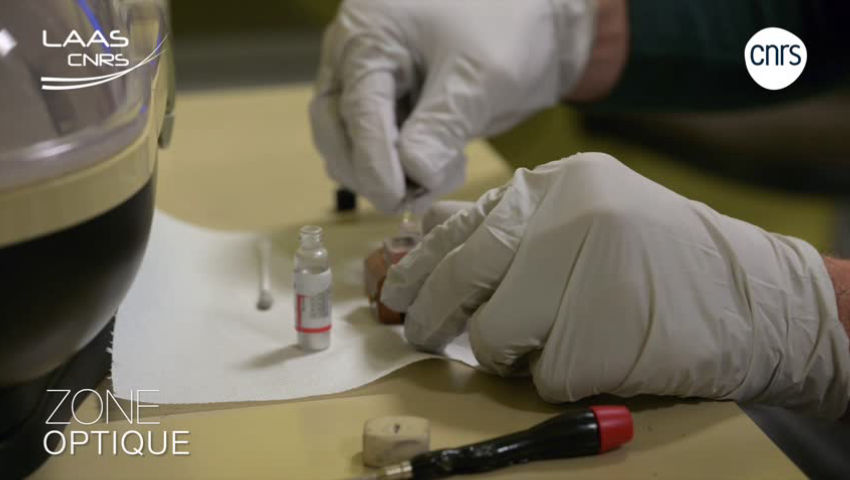
Focus, une année au coeur du LAAS-CNRS