Services and Architectures for Advanced Networks
- sara -
With the rise of the Internet of Things and Edge Computing, the multiplication of radio access technologies (notably 5G and LPWAN networks) and a strong trend towards network virtualization, the importance of these systems is set to increase still further. These developments will also lead to unprecedented network complexity, the mastery of which is already posing real conceptual difficulties. Against this backdrop, the team's work is aimed at achieving real methodological breakthroughs in the design, deployment, planning, supervision and control of communication networks and services. Our contributions include the development of methods, models and tools, as well as proposals for architectures, protocols and services. To address these challenges, the team is organized into two research axes, with the first focusing on network architectures and services, and the second on distributed algorithms, protocols and network architectures. These two areas of research naturally interact and draw on a number of theoretical models and tools, ranging from graph grammars and ontologies to theories of queuing and non-cooperative games, mathematical optimization and machine learning.
Reconfigurable architectures for connected objects
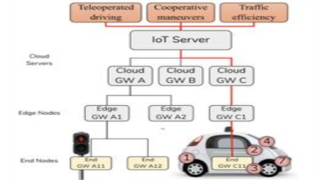
Approaches for moving from application silo architectures to opened and dynamically reconfigurable architectures hosting multiple context aware applications.
Energy-aware Networks
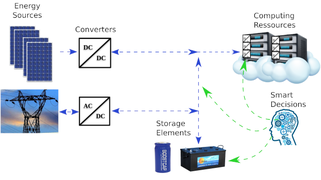
This research topic focuses on multi-objective optimization of Quality of Service (QoS) and energy efficiency in today's innovative architectures (cloud/fog/edge computing).
Scalable algorithms, protocols and services
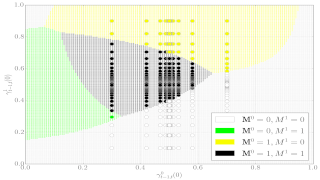
The aim of this work is to design algorithms for resource allocation and scheduling, as well as service discovery and composition, that will scale up to tomorrow's networks.
Stand-alone networks and applications
The aim is to design methods enabling networks and applications to react autonomously to adverse events and demand fluctuations, with minimal human intervention.
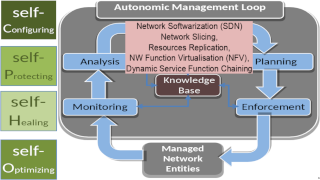
Network softwarization and virtualization
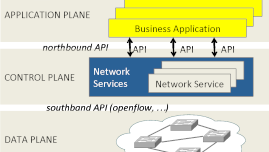
Our work is aimed at more agile networks in which the data and control planes are separated, and in which certain functions are implemented in software.
Head

Scientific executive







Contractor researcher
ITA contractor
PhD

Scientific guest
Affiliate researcher
Latest publications
2026
Journal articles
Conference papers
Reports
Preprints, Working Papers, ...
2025
Journal articles
Book sections
Conference papers
Other documents
Reports
Philippe Owezarski. D7.1 Architecture V1. LAAS-CNRS. 2025. ⟨hal-05337335⟩
Preprints, Working Papers, ...
Gersende Fort, Marcelo Pereyra. Monte Carlo. 2025. ⟨hal-05166306⟩
2024
Journal articles
Conference papers
Other documents
Proceedings
Reports
Preprints, Working Papers, ...
2023
Journal articles
Conference papers
Other documents
Reports
Preprints, Working Papers, ...
2022
Journal articles
Books
Book sections
Conference papers
Reports
Preprints, Working Papers, ...
2021
Journal articles
Conference papers
Other documents
Reports
Preprints, Working Papers, ...
Awards
- 2023 Outstanding Contributions Award, IEEE International Conference on Ubiquitous Intelligence and Computing (UIC).
- Best Demo Award. International Conference on Service Oriented Computing (ICSOC 2018)
- Runner-up Demo Award. IEEE Consumer Communications & Networking Conference (CNCC 2017)
- Runner-up Demo Award. IEEE International Symposium on Local and Metropolitan Area Networks (LANMAN 2016)
- Best Research Paper Award. IEEE International Conference on Cloud Computing Technology and Science (CloudCom 2011)
- Best artifact award. ACM Internet Measurement Conference (IMC 2023)
- Best short paper award. ACM Internet Measurement Conference (IMC 2022)
Responsibilities
- Vice-Chairman of the IEEE Technical Committee on Scalable Computing (TCSC) of the IEEE Computer Society (CS) depuis Janvier 2023.
- Membre du IEEE Award Committee for Excellence in Scalable Computing for Mid-career Researchers, Early-career Researchers & Outstanding Ph.D Thesis.
Participation in editorial boards
- Wiley Internet Technology Letters , depuis 2017 (ITL)
- Journal on Network and System Management, depuis 2015 (JNSM)
- IEEE Internet of Things Journal (IEEE IoT), depuis 2018 (IEEE IoTJ)
- Smart Science Journal, depuis 2018 (Smart Science)
- International Journal of Digital Signals and Smart Systems, depuis 2016 (IJDSSS)
- IEEE Transactions on Network Science and Engineering, depuis 2023
- IEEE Transactions on Network and Service Management, depuis 2022
- IEEE Transactions on Cloud Computing, depuis 2016
Organization of international conferences
General Chair :
- The 22nd International Conference on Service-Oriented Computing (ICSOC). Tunis, Tunisa, Nov. 2024 (icsoc.org)
- The ACS/IEEE International Conference on Computer Systems and Applications (AICCSA 2024, Sousse, Tunisia, nov. 2024.
- Symposium on Solutions for Smart Cities Challenges (SSCC2021), Gandia, Spain. December 6-9, 2021
- 30th IEEE International Conference on Enabling Technologies: Infrastructure for Collaborative Enterprises(IEEE WETICE 2021)
- 29th IEEE International Conference on Enabling Technologies: Infrastructure for Collaborative Enterprises(IEEE WETICE 2020)
TPC Chair :
- The 19th IEEE International Conference on Ubiquitous Intelligence and Computing (IEEE UIC 2022), Haikou China, Décember 2022.
- The IEEE International Conference on Collaboration Technologies and Infrastructures (IEEE Wetice 2021), conférence virtuelle, octobre 2021.
- The 13th International Symposium on Intelligent Distributed Computing (IDC 2019), Saint-Petersbourg, Russian Federation, October, 2019.
- The 17th International Conference on Service-Oriented Computing (ICSOC). October 28-31, 2019. Toulouse,France (icsoc.org)
- The ACS/IEEE International Conference on Computer Systems and Applications (AICCSA 2019, Abou Dhabi, EAU, novembre 2019.
Program Committee member
- ACM SIGMETRICS (https://www.sigmetrics.org/sigmetrics2024/), ACM IMC (https://www.sigcomm.org/events/imc-conference), IEEE UIC 2023 (https://ieee-smart-world-congress.org/program/uic2023/overview), ICSOC (https://icsoc.org), ECSA (https://ecsa-conferences.org/series/)
Organization of international workshops
- 13th IEEE Workshop Parallel / Distributed Combinatorics and Optimization (PDCO 2023) St Petersburg, Florida, USA.
- 12th IEEE Workshop Parallel / Distributed Combinatorics and Optimization (PDCO 2022), Lyon France.
International cooperation
The SARA team fosters global research partnerships and acknowledges the valuable contributions of international colleagues to the SARA team's scientific endeavours. It recognizes international collaborators who work closely with its members.
To be considered eligible, these collaborators must:
- Be affiliated within a research institution outside of France,
- Have visited or conducted a stay at LAAS in Toulouse within the past five years,
- Have co-authored scientific publications or have co-supervised a PhD Thesis with the team members.
The process for appointing SARA Research Fellows involves three steps:
- The team members nominate potential candidates,
- The team scientific council reviews and validates the nominations,
- The team leader validates officially the final appointment decision.
2024 SARA Research Fellows
- Saúl Eduardo Pomares Hernández - Instituto Nacional de Astrofísica, Óptica y Electrónica (INAOE), Puebla, Mexico
5G platform: Experimental platform based on servers and USRPs for hardware, and above all Open Air Interface (OAI) software. It enables up to two gNodeBs (5G antennas) and two users to be set up for experiments. The aim is to implement new approaches to resource management, security, etc., so that they can be evaluated in a real environment. It completes the study spectrum by enabling us to evaluate real-life implementations of the new techniques we are developing for 5G.
OptiCloudNRJ: OpenStack-based Cloud platform comprising 4 servers, one of which is front-end AC-powered and energy-monitored by a PDU; 2 servers are located in the ADREAM building and are DC-powered via a dedicated photovoltaic panel array. By taking advantage of the DC bus supervision system in the ADREAM building, the idea is to be able to deploy task/virtual machine scheduling algorithms/heuristics that take into account quality of service and energy consumption parameters. As part of the building's energy supply comes from photovoltaic panels, the platform enables different scheduling solutions to be evaluated, taking into account the solar energy available and the amount of energy available in the storage elements, for a given server load. The platform also enables offline scenarios to be replayed.
Smart city model: Model of a smart, connected city with roads, RSUs, edge computing nodes (raspberry, telephones, etc.), pedestrians (playmobil) and signaling (traffic lights, signs, etc.), with NFV/SDN-based infrastructure. For the moment, the prototype is being used to implement, validate and evaluate QoS management actions in a dynamic, mobile environment (placement, migration, scheduling, (re)configuration, etc.) for the services deployed. (e.g., trust/recommendation, security/privacy, AI/ML, etc.).
QoS-Aware NFV-enabled IoT service platform: This is an extension of our M2M/IOT service platform (OM2M), adding dynamic deployment of virtualized network functions (VNF) for end-to-end traffic management. The original idea is to replace the cloud approach of "systematic scale-out" with solutions that reduce the cost of platform deployment while maintaining acceptable quality of service. We have demonstrated a 60% reduction in deployment costs by developing solutions based on the virtualization of traffic management functions in a way suited to end-to-end deployment in M2M/IoT platforms.
THESIS / HDR
2026
2025
2024
Zheng Zhou, Thèse: IoT omniprésent grâce aux communications spatiales
2023
Clément Cassé, Thèse: Prévision des performances des services Web en environnement Cloud
2022
2021
Kokouvi Benoit Nougnanke, Thèse: Vers un management basé ML des Réseaux SDNs
Clovis Anicet Ouedraogo, Thèse: Sur la gestion de la QoS dans les plates-formes IoT compatibles NFV
2020
Quentin Ricard, Thèse: Détection autonome de trafic malveillant dans les réseaux véhiculaires
Imane Oussakel, Thèse: Métrologie et management des réseaux cellulaires 4G/5G
Santiago Duran, Thèse: Allocation de ressources avec environnements observables et non-observables
2019
2018
Nicolas Seydoux, Thèse: Vers une gestion intelligente des données de l'Internet des Objets
Gilles Roudiere, Thèse: Détection d'attaques sur les équipements d'accès à Internet
2017
2016
Ikbel Guidara, Thèse: Choix efficace du temps et du QoS pour la composition du service
OTHER TEAMS OF DEPARTMENT
Jobs / Interships
23.11.23 : LoRa-based systems
04.02.25 : MCF 27 INSA/GEI – Systèmes et services intelligents autonomes et frugaux (n° Odyssée 252196)
07.11.25 : Thèse : Détection d’attaques dans les réseaux de nouvelle génération grâce à l’IA symbolique
REJOINDRE
Notre équipe de recherche
Pour plus d’informations sur les offres d’emploi, vous pouvez contacter