“Think Positive”: Stabilization of Positive-Orthant Positive-Input Systems (Seminar by CNRS Fellow-Ambassador)
- Debut :
- 7 avril 2026 11:00
- Fin :
- 7 avril 2026 12:00
- Lieu :
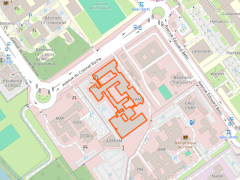
- LAAS-CNRS - Salle de Conférences 7 avenue du Colonel Roche 31077 TOULOUSE Cedex 4
- Unités :
- Mots clefs :
Intervenants
Miroslav Krstic, Professor, University of California San Diego, USA
Miroslav Krstic is a professor and Vice Chancellor for Research at the University of California, San Diego (UC San Diego). He is an internationally recognized expert in nonlinear systems and partial differential equations, with major contributions to adaptive control, infinite-dimensional systems, and extremum-seeking methods, which aim to optimize the operation of complex systems in real time. His work has earned numerous prestigious distinctions, including the IEEE Brockett Award, the Bode Lecture Prize, the ASME Oldenburger Medal, the SIAM Reid Prize, and the Richard E. Bellman Control Heritage Award. He is currently the Editor-in-Chief of IEEE Transactions on Automatic Control, and previously served as Editor-in-Chief of Systems & Control Letters and Senior Editor of Automatica. Miroslav Krstic is a CNRS Fellow-Ambassador, a member of the Serbian Academy of Sciences and Arts, and a fellow of several professional societies, including IEEE, IFAC, SIAM, ASME, and AIAA. He is the coauthor of 19 books -- including the widely adopted Nonlinear and Adaptive Control Design -- and several hundred scientific publications.
Résumé
De nombreux systèmes rencontrés en science et en ingénierie—tels que les populations biologiques, les réseaux chimiques, les systèmes de stockage d’énergie, les flux de trafic ou encore les processus thermodynamiques—partagent une caractéristique fondamentale : leurs états et leurs commandes sont intrinsèquement positifs. Ces systèmes positifs obéissent à des dynamiques qui diffèrent profondément de celles étudiées en automatique classique.
Dans cet exposé, nous montrerons comment cette contrainte de positivité transforme les fondements de l’analyse de stabilité et de la synthèse de commande. Les notions classiques basées sur des normes symétriques laissent place à des métriques fortement asymétriques, et les conditions usuelles des fonctions de Lyapunov de commande doivent être repensées. Il en résulte de nouveaux principes de stabilité, moins contraignants et particulièrement propices à des méthodes de conception élégantes.
À partir de ces idées, nous présenterons des approches générales et systématiques pour la stabilisation et la commande inverse optimale de systèmes à états et commandes positifs. Loin d’être une contrainte, la positivité ouvre ainsi la voie à une théorie riche et structurée, avec de nombreuses applications.
Pour illustrer ces concepts, nous nous appuierons sur la dynamique proie-prédateur, qui offre un exemple intuitif et visuellement parlant des comportements collectifs pouvant être stabilisés.
Abstract
Title : “Think Positive”: Stabilization of Positive-Orthant Positive-Input Systems
Abstract: Many systems encountered in science and engineering -- such as biological populations, chemical reaction networks, energy storage devices, traffic flows, and thermodynamic processes -- share a fundamental feature: their states and control inputs are inherently nonnegative. These positive systems obey dynamics that differ significantly from those typically studied in classical control theory.
In this talk, we explore how positivity reshapes the foundations of stability and control design. Standard notions based on symmetric norms and classical Lyapunov conditions give way to asymmetric metrics and fundamentally different stability principles. In particular, the familiar Control Lyapunov Function (CLF) framework must be reinterpreted, leading to new and less restrictive conditions that enable elegant and powerful design methods.
Building on these ideas, we present general and systematic recipes for both stabilization and inverse optimal control of systems with positive states and controls. Rather than being a limitation, positivity opens the door to a rich and structured theory with strong practical relevance.
To illustrate these concepts, we will use predator-prey dynamics as an intuitive and visually compelling example, highlighting how complex interactions can be guided toward stable and desirable behaviors.