Insect Neural Mechanisms for Robotics Navigation by Gabriel Gattaux (Meeting of the Robotics Dept.)
- Debut :
- 6 juillet 2026 16:00
- Fin :
- 6 juillet 2026 17:00
- Lieu :
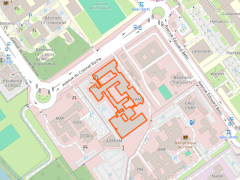
- LAAS-CNRS - Salle de Conférences 7 avenue du Colonel Roche 31077 TOULOUSE Cedex 4
- Unités :
- rap / ris / gepetto / rob
- Mots clefs :
Intervenants
Gabriel Gattaux, M., Aix-Marseille University
Gabriel Gattaux is a PhD candidate in Robotics at Aix-Marseille University with a focus on bio-inspired robotics, working at the intersection of autonomous robotics, neuromorphic engineering, natural and artificial vision, control theory, computational neuroscience, and ethology. His research aims to understand how biological systems, particularly insects such as ants, bees, and flies, perceive, navigate, and make decisions in natural environments, and to translate these principles into frugal and robust autonomous machines. His work has recently been published in Nature Communications and IEEE Robotics and Automation Letters. His doctoral work is conducted under the supervision of Franck Ruffier, Julien Serres, and Antoine Wystrach, in collaboration with the Centre de Recherche sur la Cognition Animale (CNRS, Toulouse), the Joint Robotics Laboratory (CNRS-AIST, Japan), and ENSTA Bretagne. He holds an Engineering Degree in Mechatronics from the ENSIL-ENSCI Engineering School at the University of Limoges, including an exchange in Computer Science at Wrocław University of Science and Technology. Prior to this, he earned a University Degree in Technology (DUT) in Mechanical and Production Engineering from the Nancy-Brabois Institute of Technology, alongside a dual curriculum with Polytech Nancy.
Résumé
Les robots autonomes rencontrent encore des difficultés majeures pour naviguer dans des environnements naturels complexes, sous fortes contraintes d'énergie, de calcul, de perception et de communication. À l'inverse, des insectes tels que les fourmis et les abeilles parviennent à des capacités de navigation remarquables grâce à des cerveaux miniatures et des systèmes visuels extrêmement frugaux. Comprendre ces mécanismes ouvre une voie prometteuse vers le développement de machines autonomes légères et robustes, capables de fonctionner dans des environnements sans GNSS et à communication limitée. Dans cet exposé, je présenterai une série de systèmes robotiques bio-inspirés et de modèles computationnels étudiant comment les principes de navigation visuelle des insectes peuvent être transposés aux robots autonomes. Je me concentrerai sur le suivi d'itinéraire, le retour au nid par vision (visual homing) et les stratégies d'apprentissage-répétition (teach-and-repeat), fondées sur le comportement des insectes et des architectures neuronales inspirées du cerveau, utilisant une vision à très basse résolution. Ces approches ont été mises en œuvre et validées sur plusieurs plateformes robotiques, notamment des robots de type voiture, des micro-drones, et plus récemment des robots humanoïdes, dans des environnements à la fois contrôlés et naturels. Je montrerai en particulier comment une navigation robuste peut émerger à partir de ressources sensorielles et computationnelles minimales, avec des systèmes fonctionnant embarqués à 15 Hz sur un Raspberry Pi en Python, n'utilisant que des entrées visuelles de 32 × 32 pixels, une empreinte mémoire aussi faible que 0,3 Mo par kilomètre, et atteignant une erreur latérale médiane de 25 cm sur plus de 1,6 km de trajets en conditions réelles. Au-delà de leurs applications en ingénierie, ces systèmes offrent un cadre computationnel permettant de tester des hypothèses sur la cognition animale, la mémoire visuelle et la prise de décision, tout en explorant plus largement comment une intelligence frugale peut émerger de l'interaction entre perception, mémoire et action, contribuant ainsi à la fois à la robotique autonome et à la compréhension de l'intelligence biologique.
Bio : Gabriel Gattaux est doctorant en robotique à Aix-Marseille Université, spécialisé en robotique bio-inspirée, à l'intersection de la robotique autonome, de l'ingénierie neuromorphique, de la vision naturelle et artificielle, de la théorie du contrôle, des neurosciences computationnelles et de l'éthologie. Ses recherches visent à comprendre comment les systèmes biologiques, en particulier les insectes tels que les fourmis, les abeilles et les mouches, perçoivent, naviguent et prennent des décisions dans des environnements naturels, et à transposer ces principes dans des machines autonomes frugales et robustes. Ses travaux ont récemment été publiés dans Nature Communications et IEEE Robotics and Automation Letters. Sa thèse est réalisée sous la direction de Franck Ruffier, Julien Serres et Antoine Wystrach, en collaboration avec le Centre de Recherche sur la Cognition Animale (CNRS, Toulouse), le Joint Robotics Laboratory (CNRS-AIST, Japon) et l'ENSTA Bretagne. Il est titulaire d'un diplôme d'ingénieur en mécatronique de l'école d'ingénieurs ENSIL-ENSCI de l'Université de Limoges, avec un échange académique en informatique à l'Université des Sciences et Technologies de Wrocław. Auparavant, il a obtenu un DUT (Diplôme Universitaire de Technologie) en Génie Mécanique et Productique de l'Institut Universitaire de Technologie Nancy-Brabois, en parallèle d'un double cursus avec Polytech Nancy.
Site web : https://gaby-253.github.io
Abstract
Autonomous robots still face major challenges when navigating in complex natural environments under strong constraints of energy, computation, sensing, and communication. In contrast, insects such as ants and bees achieve remarkable navigation abilities using miniature brains and highly frugal visual systems. Understanding these mechanisms offers a promising route toward the development of lightweight and robust autonomous machines capable of operating in GNSS-denied and communication-limited environments. In this talk, I will present a series of bio-inspired robotic systems and computational models investigating how insect visual navigation principles can be translated into autonomous robots. I will focus on route following, visual homing, and teach-and-repeat strategies based on insect behavior and brain-inspired neural architectures using ultra-low-resolution vision. These approaches have been implemented and validated on multiple robotic platforms, including car-like robots, micro aerial vehicles, and more recently humanoid robots, in both controlled and natural environments. In particular, I will show how robust navigation can emerge from minimal sensory and computational resources, with systems operating onboard at 15 Hz on a Raspberry Pi in Python, using only 32 × 32 pixel visual inputs, memory footprints as low as 0.3 MB per kilometer, and achieving a median lateral error of 25 cm over more than 1.6 km of real-world routes. Beyond their engineering applications, these systems provide a computational framework to test hypotheses about animal cognition, visual memory, and decision-making, while more broadly exploring how frugal intelligence can emerge from the interaction between perception, memory, and action, contributing to both autonomous robotics and the understanding of biological intelligence.
Bio : Gabriel Gattaux is a PhD candidate in Robotics at Aix-Marseille University with a focus on bio-inspired robotics, working at the intersection of autonomous robotics, neuromorphic engineering, natural and artificial vision, control theory, computational neuroscience, and ethology. His research aims to understand how biological systems, particularly insects such as ants, bees, and flies, perceive, navigate, and make decisions in natural environments, and to translate these principles into frugal and robust autonomous machines. His work has recently been published in Nature Communications and IEEE Robotics and Automation Letters. His doctoral work is conducted under the supervision of Franck Ruffier, Julien Serres, and Antoine Wystrach, in collaboration with the Centre de Recherche sur la Cognition Animale (CNRS, Toulouse), the Joint Robotics Laboratory (CNRS-AIST, Japan), and ENSTA Bretagne. He holds an Engineering Degree in Mechatronics from the ENSIL-ENSCI Engineering School at the University of Limoges, including an exchange in Computer Science at Wrocław University of Science and Technology. Prior to this, he earned a University Degree in Technology (DUT) in Mechanical and Production Engineering from the Nancy-Brabois Institute of Technology, alongside a dual curriculum with Polytech Nancy.
Website : https://gaby-253.github.io